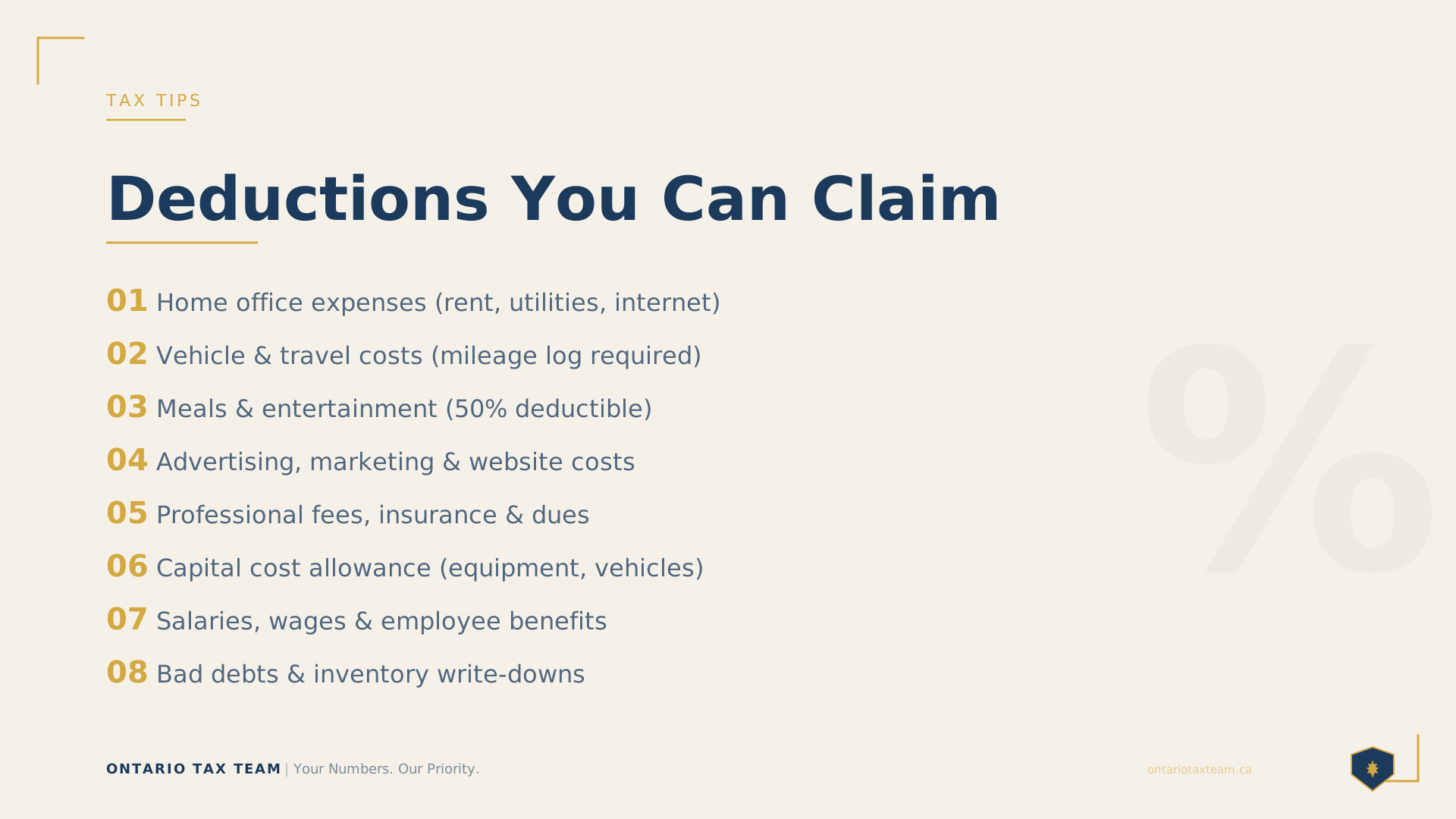
One of the biggest advantages of running a business in Canada is the ability to deduct legitimate business expenses from your income, reducing the amount of tax you owe. If you're self-employed in Ontario, knowing what qualifies is especially important - many business owners miss deductions simply because they don't know what's eligible.
Here's a comprehensive guide to the most common small business tax deductions in Canada for 2026.
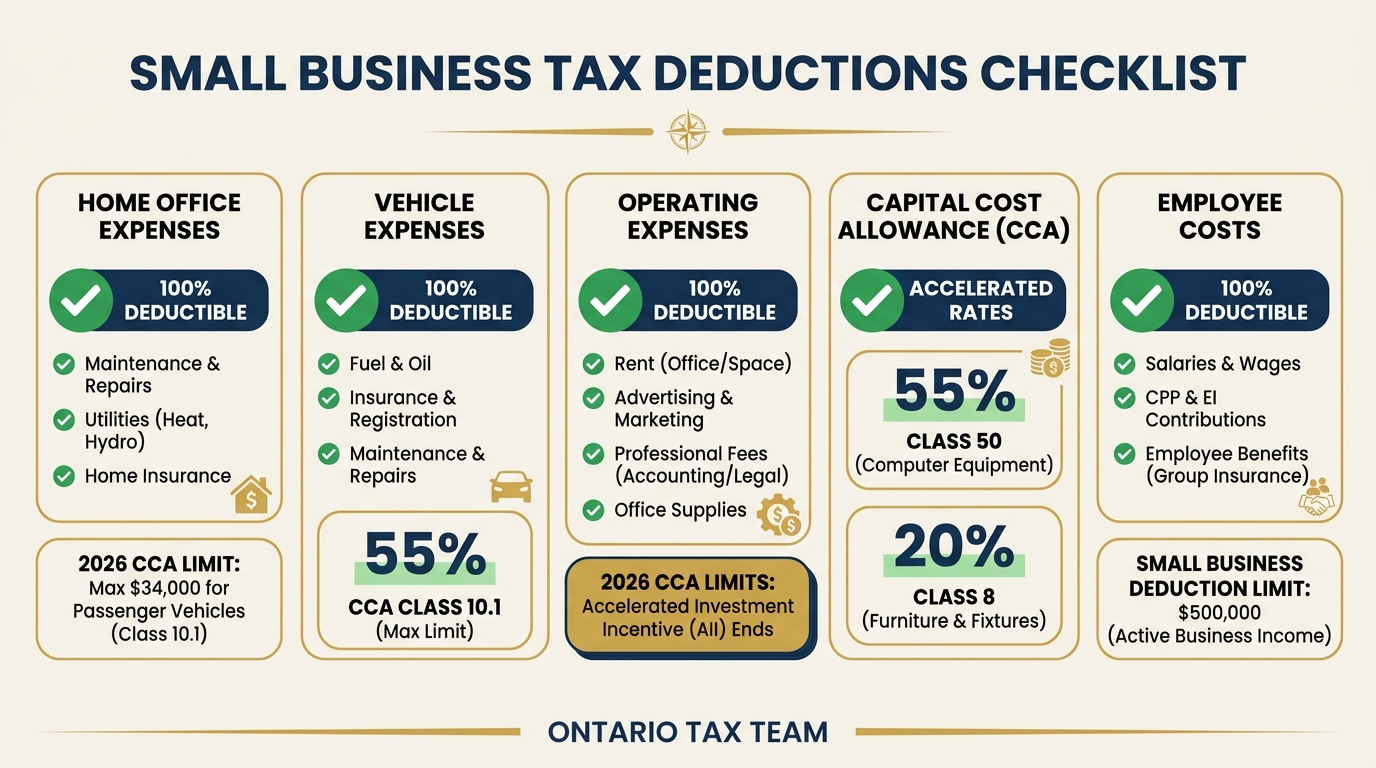
Source: Canada Revenue Agency (CRA) - 2026 tax year rates
Home Office Expenses
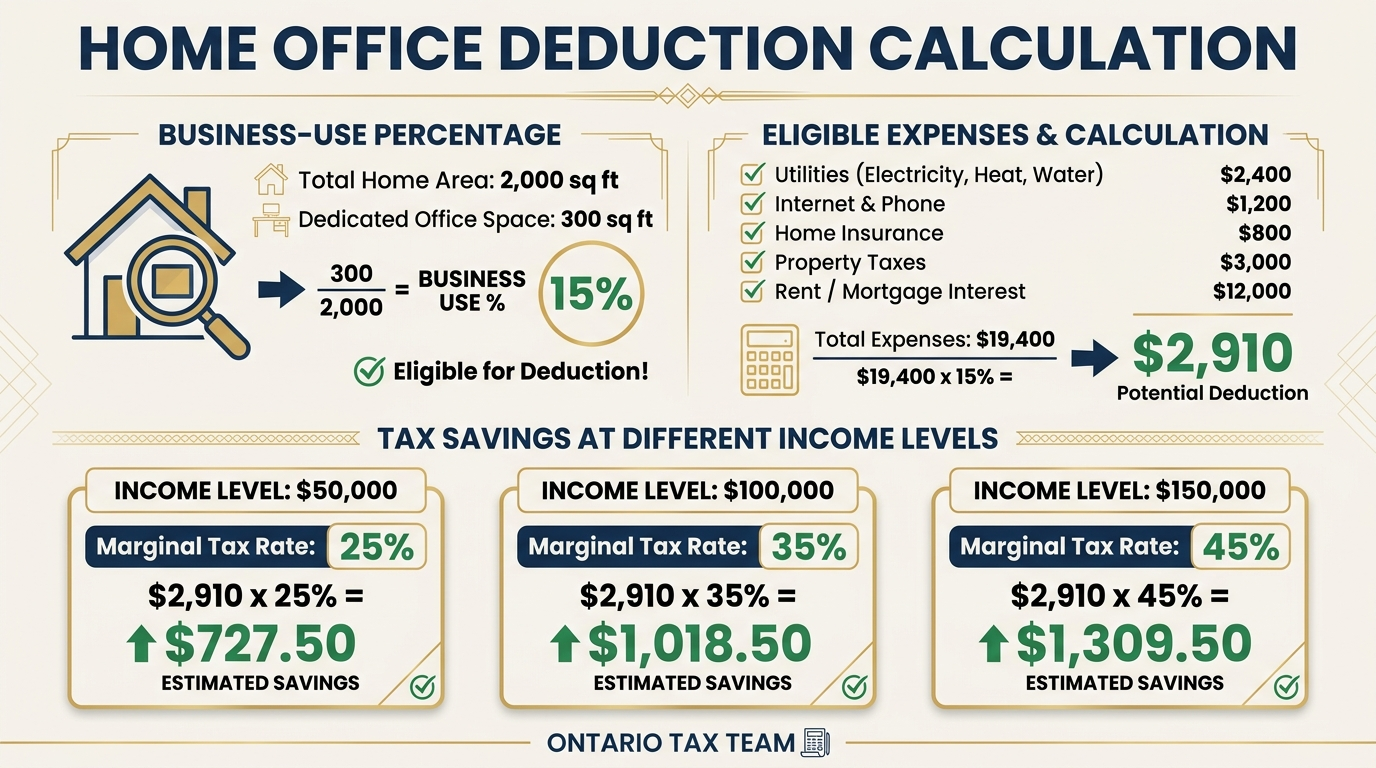
If you use part of your home regularly and exclusively for business, you can deduct a proportional share of your household expenses. For a detailed walkthrough, see our guide on home office tax deductions in Canada. The deduction is calculated based on the percentage of your home used for business (by square footage or number of rooms).
Deductible home office expenses include:
- Rent or mortgage interest (not the principal portion)
- Property taxes
- Utilities (heat, electricity, water)
- Home insurance
- Internet service
- Maintenance and minor repairs
Note: If you're a sole proprietor, home office expenses cannot create a business loss - they can only reduce your business income to zero. Any excess can be carried forward to future years.
Vehicle Expenses
If you use your vehicle for business purposes, you can deduct the business-use portion of your vehicle expenses. CRA requires you to keep a logbook tracking your business kilometres versus total kilometres driven.
Deductible vehicle expenses include:
- Fuel and oil
- Insurance
- Licence and registration
- Maintenance and repairs
- Lease payments (subject to limits) or Capital Cost Allowance (for owned vehicles)
- Parking fees and tolls (for business trips)
For 2026, the CCA limit on passenger vehicles is $37,000 (plus tax), and the deductible lease limit is $950 per month (plus tax).
Meals and Entertainment
Business meals and entertainment are 50% deductible in Canada. This includes meals with clients, business lunches, and entertainment directly related to earning business income. Keep receipts and note the business purpose and who attended.
Advertising and Marketing
All advertising and marketing costs are fully deductible, including:
- Website design and hosting
- Google Ads and social media advertising
- Business cards, flyers, and print materials
- SEO and digital marketing services
- Trade show and event costs
Professional Fees
Fees paid to professionals for business purposes are deductible:
- Accounting and bookkeeping fees
- Legal fees related to your business
- Consulting fees
- Professional membership dues (for required memberships)
Hiring a professional bookkeeper and qualified accountant are both fully deductible business expenses.
Salaries and Wages
All compensation paid to employees is deductible, including salaries, wages, bonuses, vacation pay, and your employer share of CPP and EI premiums. If you pay family members, their compensation must be reasonable for the work they perform.
Office Supplies and Equipment
Office supplies are fully deductible in the year of purchase. Equipment and furniture are capitalized and deducted over time through Capital Cost Allowance (CCA). Under the Accelerated Investment Incentive, many assets qualify for enhanced first-year CCA deductions.
Insurance Premiums
Business insurance premiums are deductible, including:
- General liability insurance
- Professional liability (errors and omissions) insurance
- Business property insurance
- Commercial vehicle insurance
- WSIB premiums
Business Travel
Travel expenses for business purposes are deductible, including flights, hotels, car rentals, and a reasonable amount for meals while travelling. Personal portions of mixed business/personal trips are not deductible.
Software and Subscriptions
Monthly and annual software subscriptions used for business are fully deductible. This includes accounting software (QuickBooks), project management tools, CRM systems, cloud storage, and industry-specific software.
Bad Debts
If a client owes you money and you've determined the debt is uncollectable, you can write it off as a bad debt expense. You must have previously included the amount in your income and made reasonable efforts to collect.
Common Mistakes to Avoid
- Not keeping receipts or proper documentation - see our guide to preparing documents for tax season
- Claiming personal expenses as business deductions
- Not maintaining a vehicle logbook
- Missing the home office deduction entirely
- Confusing capital expenses with operating expenses (see financial statements explained)
- Not claiming CCA on eligible assets
A qualified tax preparer catches these mistakes before they become CRA problems.
Bottom Line
Every legitimate business deduction you claim reduces your taxable income and your tax bill. The key is keeping organized records, maintaining proper documentation, and working with a knowledgeable accountant who ensures you're claiming everything you're entitled to. At Ontario Tax Team, we review your expenses line by line to maximize your deductions while keeping you CRA-compliant. Whether you are a small business, self-employed professional, or contractor, our team knows which deductions apply to your situation.
Need Help Maximizing Your Tax Deductions?
Our team reviews your expenses line by line to ensure you claim every deduction you are entitled to. Book a free 15-minute consultation.