It starts innocently enough. You skip one month of bookkeeping because you're busy with a big project. Then another month slips by, then a quarter, and suddenly you're staring at a full year of unsorted transactions, shoeboxes of receipts, and a looming tax deadline. You're not alone - overdue bookkeeping is one of the most common problems small business owners face, and it's entirely fixable.
This guide walks you through the catch-up process step by step, explains what it typically costs, and helps you decide whether to tackle it yourself or bring in a professional.
Signs Your Books Are Behind
Sometimes business owners don't fully realize how far behind they've fallen until a specific event forces the issue. Here are the most common warning signs:
- You can't produce a current profit and loss statement or balance sheet
- Your bank accounts haven't been reconciled in more than two months
- You're guessing at your HST liability instead of calculating it from actual records
- Tax season arrives and your accountant has nothing to work with
- You have no idea whether your business is actually profitable
- Receipts and invoices are piling up in folders, envelopes, or email inboxes without being recorded
If any of these sound familiar, your books need attention. The good news is that no matter how far behind you are, there's a systematic way to get current.
Step-by-Step Catch-Up Process
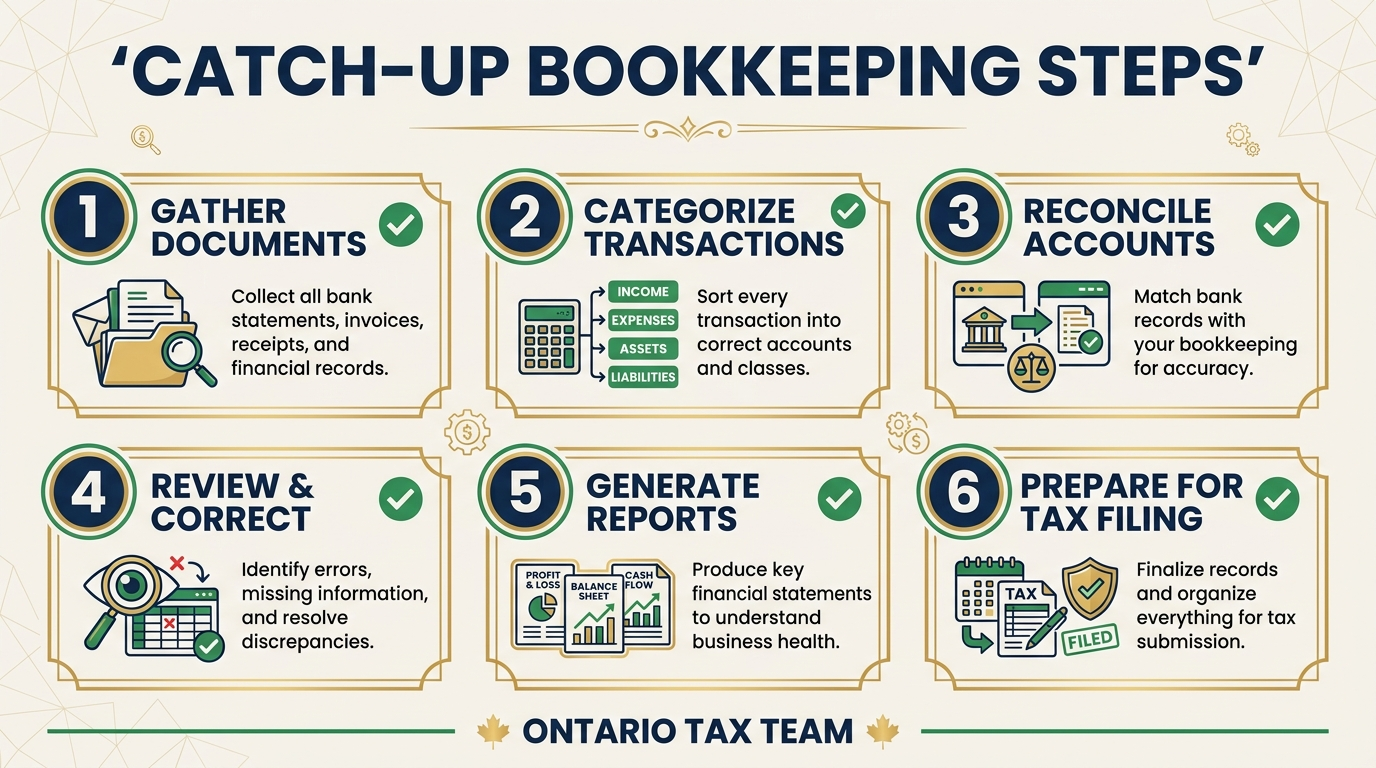
Whether you're three months or three years behind, the process follows the same fundamental steps. The only difference is scale.
Step 1: Gather All Your Documents
Before you touch your accounting software, collect everything you'll need. This includes bank statements, credit card statements, receipts, invoices (both issued and received), loan documents, payroll records, and any contracts or agreements that affect your finances. Download electronic bank statements for every month you need to catch up on.
Don't worry about organizing everything perfectly at this stage. The goal is to have all source documents in one place so nothing gets missed.
Step 2: Connect Bank Feeds
If you're using cloud accounting software like QuickBooks Online or Xero, connect your bank accounts and credit cards directly. Most banks allow you to import up to 90 days of historical transactions automatically. For older periods, you can typically download CSV or QBO files from your bank's online portal and import them manually.
Bank feeds are the backbone of modern catch-up bookkeeping. They ensure every transaction is captured and reduce the chance of manual entry errors.
Step 3: Categorize Transactions
Work through your imported transactions month by month, assigning each one to the correct expense or income category. Your chart of accounts should include categories like revenue, cost of goods sold, rent, utilities, office supplies, advertising, professional fees, meals and entertainment, vehicle expenses, and so on.
For tips on setting up your categories properly, see our bookkeeping tips for small business owners.
Step 4: Reconcile Month by Month
This is the most important step. For each month, compare the transactions in your accounting software against your bank statement to ensure the ending balances match. Do this for every bank account and credit card, one month at a time, starting from the oldest unreconciled month.
Don't try to reconcile an entire year at once. Month-by-month reconciliation catches discrepancies early and makes it much easier to find and fix errors.
Step 5: Adjust Opening Balances
If your books have never been set up properly, or if there's a gap between when your records end and when the catch-up period begins, you'll need to establish accurate opening balances. This means entering the correct starting balances for all bank accounts, credit cards, loans, and equity accounts as of the date you're starting from.
Getting opening balances wrong cascades through every report your software generates. If you're unsure how to set them, this is a good time to consult a professional.
Step 6: Handle Payroll, HST, and Other Obligations
If you have employees, make sure all payroll entries are recorded and that source deductions were remitted to CRA on time. If you're registered for HST, calculate your HST collected and paid for each filing period so you can prepare and file any outstanding HST returns.
How Long Does Catch-Up Bookkeeping Take?
The timeline depends on how far behind you are, the volume of transactions, and the complexity of your business. Here are some general benchmarks:
- 1-3 months behind: A professional can usually catch up in a few hours to one day
- 3-6 months behind: Expect one to three days of focused work
- 6-12 months behind: Typically one to two weeks for a professional, longer if done in-house
- Over a year behind: This is a multi-week project and almost always warrants professional help
Businesses with high transaction volumes - retail, food service, e-commerce - take longer than service-based businesses with fewer monthly transactions.
How Much Does Catch-Up Bookkeeping Cost?
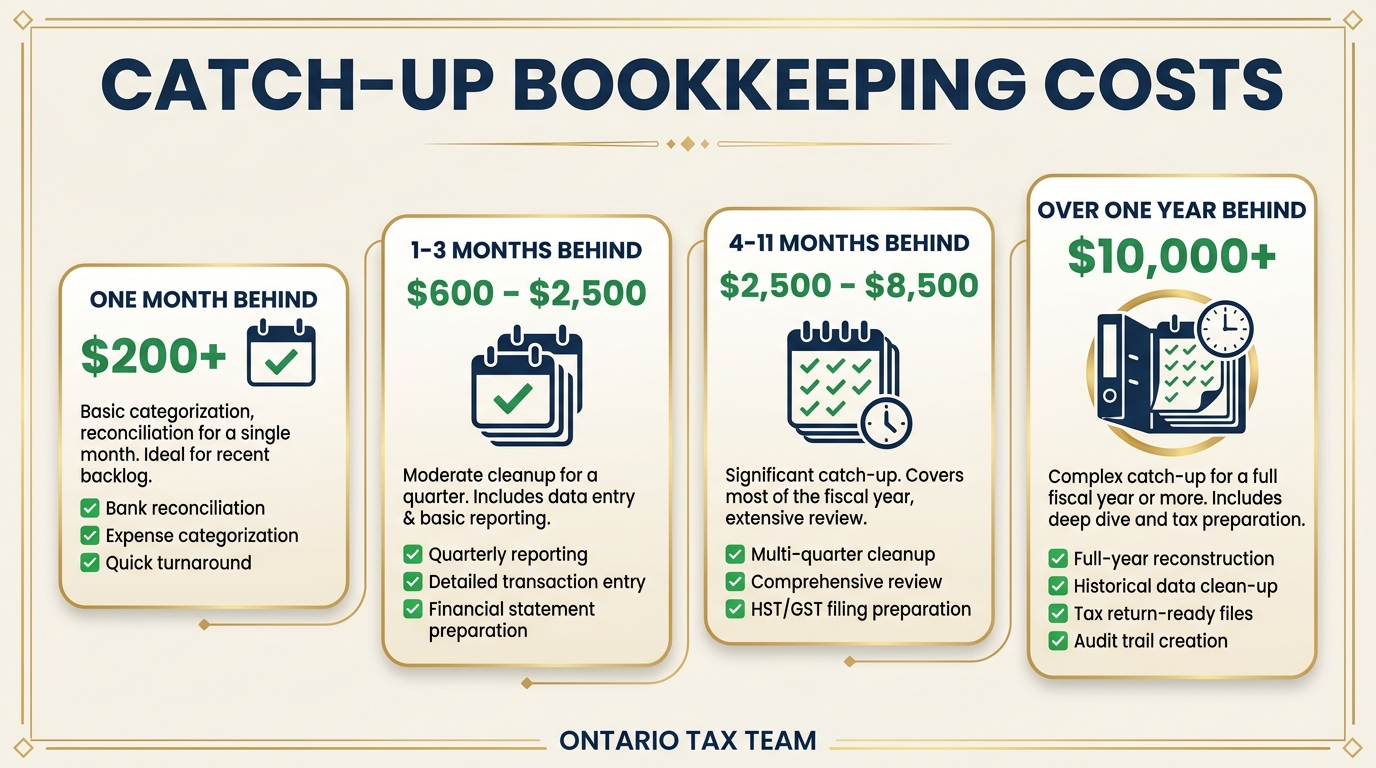
Catch-up bookkeeping is typically priced either by the hour or as a flat project fee based on the number of months and transaction volume. Hourly rates for bookkeepers in Canada generally range from $40 to $80 per hour, while CPAs may charge more for complex situations.
As a rough guide, catching up on six months of bookkeeping for a small business with moderate transaction volume might cost between $500 and $2,000. A full year or more can run $1,500 to $5,000 or higher. For a detailed breakdown of ongoing bookkeeping costs, see our guide on how much a bookkeeper costs in Canada.
Preventing It from Happening Again
Catching up is only half the battle. If you don't change the habits that caused the backlog, you'll find yourself in the same position next year. Here's how to stay current going forward:
- Schedule weekly bookkeeping time. Even 30 minutes per week keeps things manageable
- Automate bank feeds. Let your accounting software pull in transactions automatically
- Digitize receipts immediately. Snap a photo the moment you make a purchase
- Reconcile monthly. Block time on the first or last day of each month to reconcile
- Outsource if needed. A virtual bookkeeping service can handle everything on an ongoing basis so you never fall behind again
When to Hire a Professional
If you're more than three months behind, or if your situation involves unfiled HST returns, payroll issues, or complex transactions, hiring a professional is almost always the better choice. Learn why every small business needs a bookkeeper. A bookkeeper who does this regularly will work through the backlog far faster than you can, and they'll catch issues you might miss.
Ontario Tax Team's bookkeeping service includes catch-up work as a standard offering. We've helped businesses that were years behind get completely current, often in less time than they expected. Our bookkeeping team can assess your situation and provide a clear timeline and cost estimate before any work begins.
Bottom Line
Overdue bookkeeping feels overwhelming, but it's a solvable problem with a clear process. Gather your documents, import your transactions, categorize and reconcile month by month, and then put systems in place to stay current. Clean books also mean smoother tax preparation and more accurate financial statements. If the backlog is significant, a professional catch-up service pays for itself in time saved and errors avoided. The sooner you start, the sooner you'll have a clear picture of your business's financial health.
Key Takeaways
- •Catch-up bookkeeping follows a clear process: gather documents, import transactions, categorize, and reconcile month by month
- •Costs typically range from $500 to $5,000 depending on how far behind you are and your transaction volume
- •If you're more than three months behind, hiring a professional will save you significant time and catch errors you'd miss
- •Prevent future backlogs by automating bank feeds, scheduling weekly bookkeeping time, and reconciling monthly
Need Help Catching Up on Your Books?
Our bookkeeping team specializes in catch-up work and can get your books current faster than you expect. Book a free 15-minute consultation.