Your corporation's fiscal year-end is the single most important date on your tax calendar. The decisions you make - or fail to make - in the final three months before that date can mean the difference between a manageable tax bill and an unpleasant surprise. Whether your year-end falls in December or another month, this checklist walks you through everything you should be addressing in the October-to-December lead-up window (adjusted to your own fiscal calendar) so that nothing slips through the cracks.
Three Months Out: October Tasks
Start early. Waiting until the last week of December to think about tax planning is like studying for an exam the morning of - you technically can, but the results suffer. Here's what to tackle first.
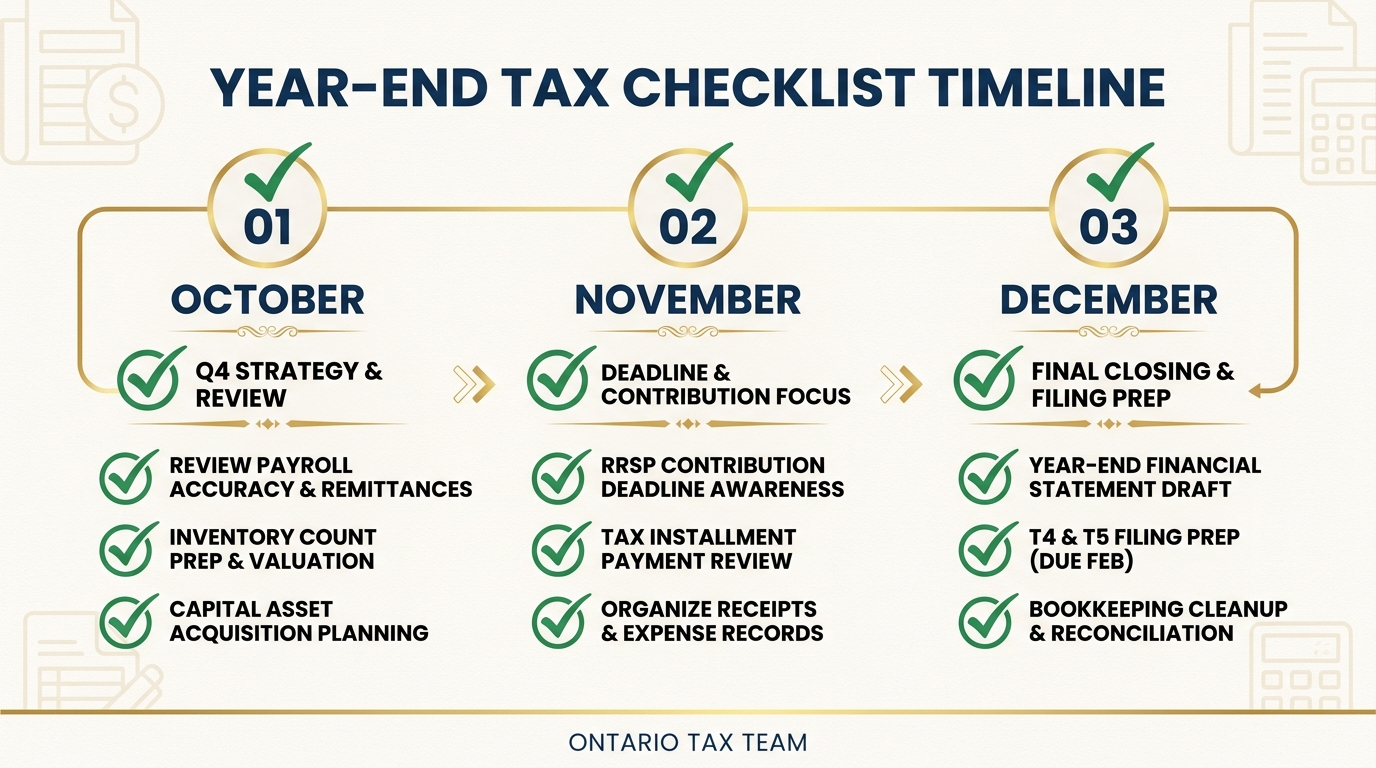
Review Your Financial Statements
Pull your year-to-date income statement and balance sheet. Are they accurate? Do the revenue figures match your bank deposits? Are expenses categorized correctly? If your bookkeeping has fallen behind, now is the time to catch up. You cannot make informed tax decisions without reliable numbers.
Look at your projected net income for the full year. This number drives every planning decision that follows - from how much salary to pay yourself to whether it makes sense to accelerate or defer expenses.
Reconcile All Accounts
Bank accounts, credit cards, loan balances, and intercompany accounts should all be reconciled through at least September. Outstanding items that have been sitting for months need investigation. Uncleared cheques older than six months may need to be written back to income. Credit card statements should match your recorded transactions to the penny.
Gather and Organize Receipts
The CRA expects you to have documentation for every expense you claim. Go through the year and identify any gaps. Missing receipts for meals, travel, office supplies, and vehicle expenses are the most common culprits. If you can't find the original, check your email for digital copies or contact the vendor for duplicates. For vehicle expenses, make sure your mileage log is current.
Two Months Out: November Tasks
With clean books in hand, November is where the real planning happens.
Review Your CCA Schedule
Capital Cost Allowance lets you deduct a portion of your capital assets each year. Review what you've purchased this year and what's already on your schedule. The Accelerated Investment Incentive Property (AIIP) rules allow an enhanced first-year deduction on many assets. For eligible property purchased before 2028, you may be able to claim up to 1.5 times the normal CCA rate in the first year.
If you've been thinking about buying equipment, a computer, or a vehicle for business use, doing it before year-end lets you start claiming CCA a year earlier. But only buy what you actually need - spending a dollar to save thirty cents in tax is still a net seventy-cent loss.
Consider Strategic Asset Purchases
Beyond CCA, certain asset purchases can qualify for immediate expensing. The federal government's Immediate Expensing rules (for Canadian-controlled private corporations) allow up to $1.5 million of eligible property to be fully expensed in the year of acquisition. This applies to assets in CCA classes 1 through 6, 8, 10, 12, 14, 16, 17, 20, 43, 43.1, 43.2, 44, 46, 50, and 53. If you have a large purchase planned for January, pulling it forward to December could generate a significant deduction this year.
Review Shareholder Loans
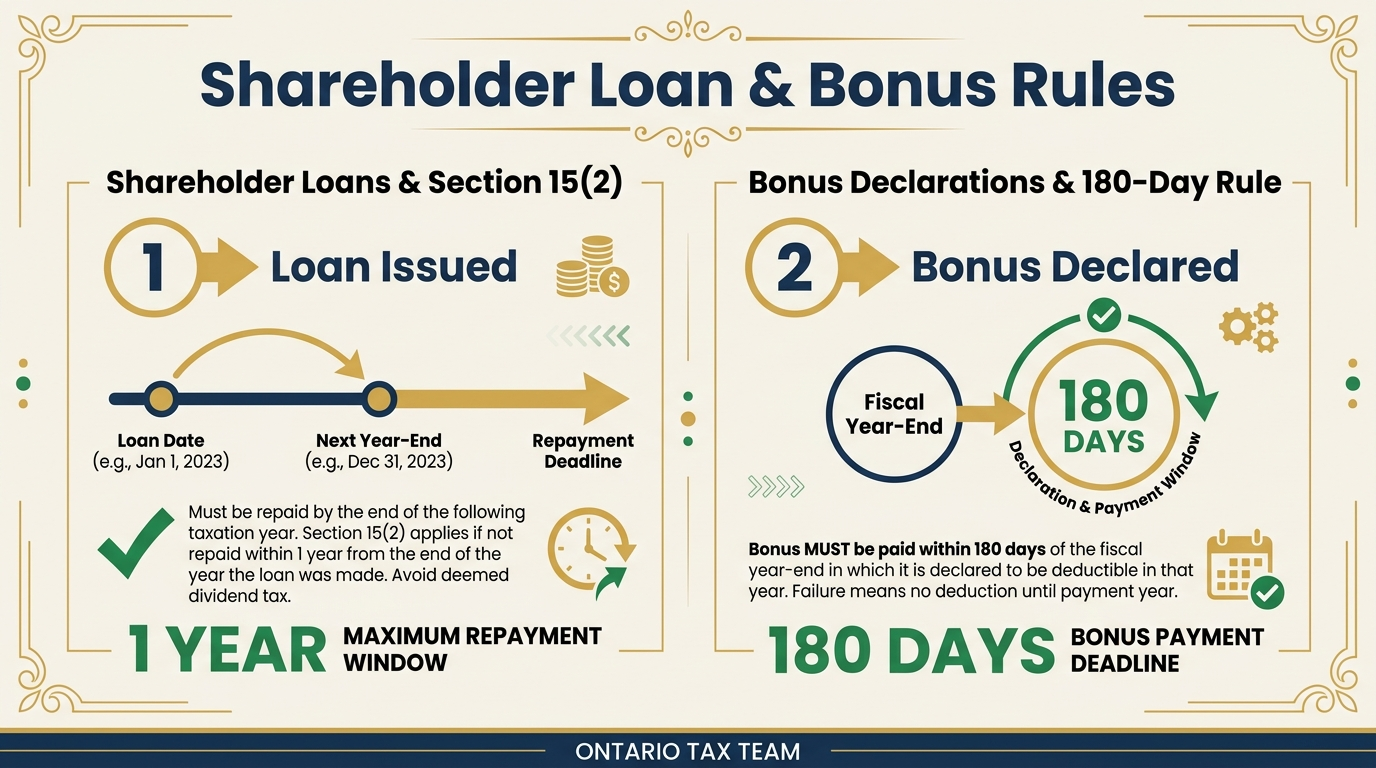
This is where many owner-managers get caught. If you've been withdrawing cash from the corporation without recording it as salary or dividends, those amounts sit as a shareholder loan on the balance sheet. Under Section 15(2) of the Income Tax Act, if a shareholder loan is not repaid within one year after the end of the corporation's tax year in which the loan was made, the full amount gets included in your personal income.
Review your shareholder loan balance now. If it's crept up, you have options: declare a salary or dividend to offset it, repay the loan before the deadline, or establish a bona fide repayment arrangement. Our corporate tax team can help you sort this out before it becomes a problem.
Optimize Your Salary/Dividend Mix
How you pay yourself from your corporation affects both your corporate and personal tax bills. Salary creates a deduction for the corporation and generates RRSP contribution room, but it's subject to CPP contributions. Dividends don't create a corporate deduction but may result in lower combined taxes depending on your income level.
The optimal mix depends on your total income, whether you need RRSP room, whether you have other income sources, and whether your corporation qualifies for the small business deduction. There's no universal answer, which is why this analysis needs to happen every year. Read our detailed comparison of salary vs dividends for the full breakdown.
One Month Out: December Tasks
The final stretch. Decisions made here need to be executed before your fiscal year-end date.
Maximize RRSP Contributions
If you're paying yourself a salary, your RRSP contribution room is based on the prior year's earned income. Make sure you're contributing enough to reduce your personal tax bill. If your corporation has excess cash, a bonus declared before year-end (even if paid in the first 180 days of the next year) creates a corporate deduction and gives you earned income for RRSP purposes.
Declare and Pay Bonuses
Bonuses must be declared before the corporation's year-end to be deductible in the current year, but the CRA allows up to 180 days after year-end to actually pay them. This is a powerful tool: you can fine-tune your corporate income to stay within the small business deduction limit and generate personal income without needing the cash right away. Just make sure you actually pay the bonus within the 180-day window, or the deduction reverses.
Prepay Deductible Expenses
Certain expenses can be prepaid before year-end and deducted in the current year. Insurance premiums, professional memberships, subscriptions, and rent paid in advance (up to the next fiscal year) may qualify. Advertising and marketing campaigns scheduled for January can sometimes be contracted and paid in December. The key rule is that the expense must relate to a service period that begins within the current year or the next year.
Review HST Obligations
Confirm that your HST filings are up to date. If you file annually, make sure your records support the Input Tax Credits you're claiming. Common issues include claiming ITCs on personal expenses run through the business, missing documentation for large purchases, and incorrectly applying the Quick Method. Your tax planning should include an HST review to avoid surprises.
File T5 Slips for Dividends
If your corporation paid dividends during the year, T5 slips must be filed with the CRA by the last day of February following the calendar year in which the dividends were paid. Get the information ready now so you're not scrambling in February. Each recipient needs a T5, and the amounts must match the dividend resolutions in your corporate minute book.
After Year-End: Prepare for T2 Filing
Once the fiscal year closes, the clock starts ticking. Your T2 corporate tax returnis due six months after your fiscal year-end. Any balance owing, however, is due just two or three months after year-end (two months if you qualify as a small CCPC, three months otherwise). That means if your year-end is December 31, taxes are due by the end of February or March, even though the return itself isn't due until June 30.
Use the weeks immediately after year-end to finalize your books, make any last adjustments, and get your financial statements prepared. The sooner you file, the sooner you know your exact tax position and can plan for the coming year.
Key Takeaways
- •Start year-end tax planning at least three months before your fiscal year-end - not the week before
- •Reconcile all accounts and catch up on bookkeeping before making any tax planning decisions
- •Review shareholder loan balances early to avoid unintended personal income inclusion under Section 15(2)
- •Bonuses declared before year-end can be paid up to 180 days later while still deducting in the current year
- •Corporate taxes owing are due two or three months after year-end, even though the T2 return has a six-month deadline
Need Help With Year-End Tax Planning?
Our corporate tax team helps small businesses optimize their year-end position and minimize taxes. Book a free 15-minute consultation.