Getting a letter from the Canada Revenue Agency is enough to ruin anyone's afternoon. But a CRA audit isn't a criminal investigation - in most cases, it's a routine review to verify that the numbers on your return match your actual records. The process is far less dramatic than most people imagine, and with proper preparation, it's entirely manageable.
Types of CRA Audits
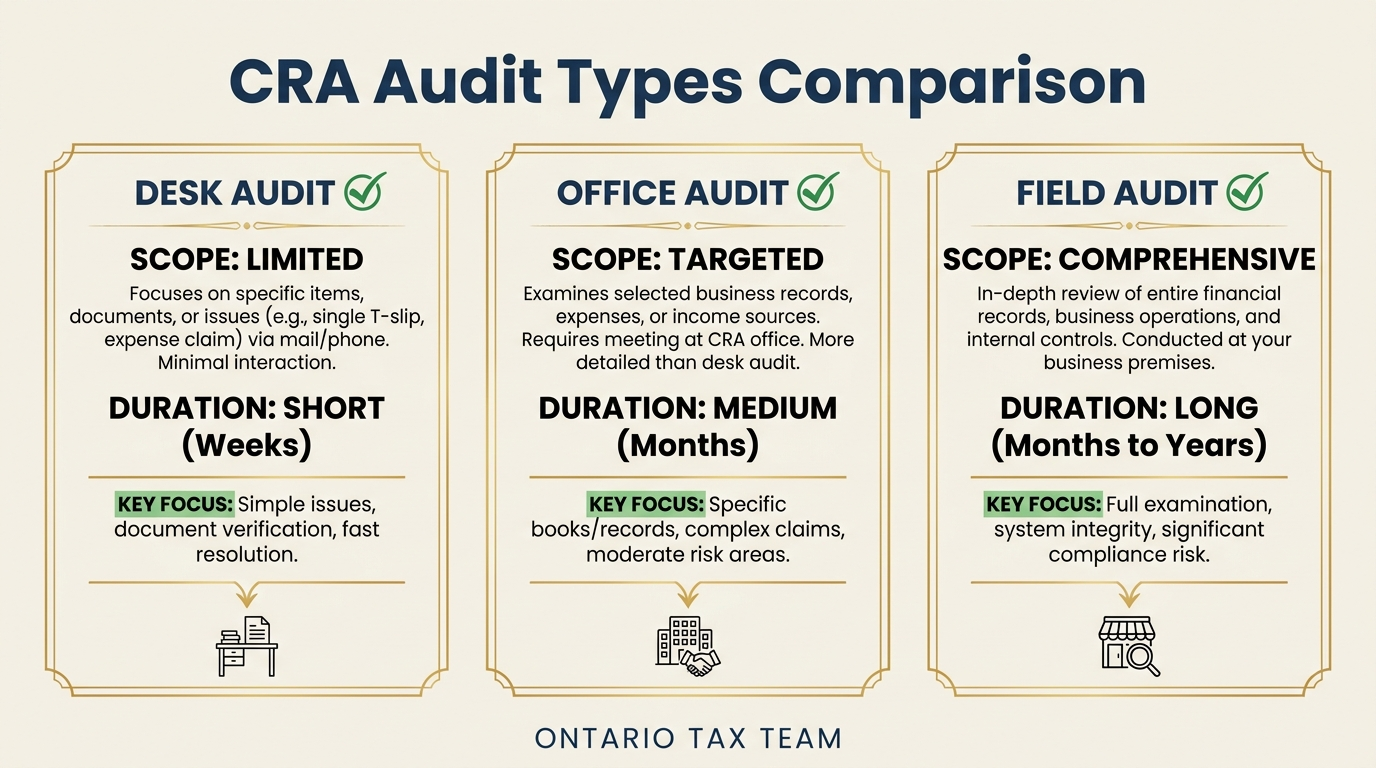
Not all audits are created equal. The CRA uses several approaches depending on the complexity of the file and the nature of their concerns.
Desk Audit (Processing Review)
This is the most common type and the least invasive. The CRA sends you a letter asking for specific documents to support a claim on your return - receipts for charitable donations, a T2200 for employment expenses, or medical expense records. You mail or upload the documents, and the auditor reviews them from their office. No one visits your home or business.
Office Audit
With an office audit, the CRA asks you to bring your records to a local CRA office for an in-person review. These are more thorough than desk audits and typically involve a broader look at your income and deductions, but they're still focused on specific items identified in advance.
Field Audit
Field audits are the most comprehensive. A CRA auditor visits your place of business (or your accountant's office) to examine your books, records, and source documents in detail. These are more common for businesses, particularly those with significant cash transactions or complex structures. Field audits can last anywhere from a few days to several months.
What Triggers a CRA Audit?
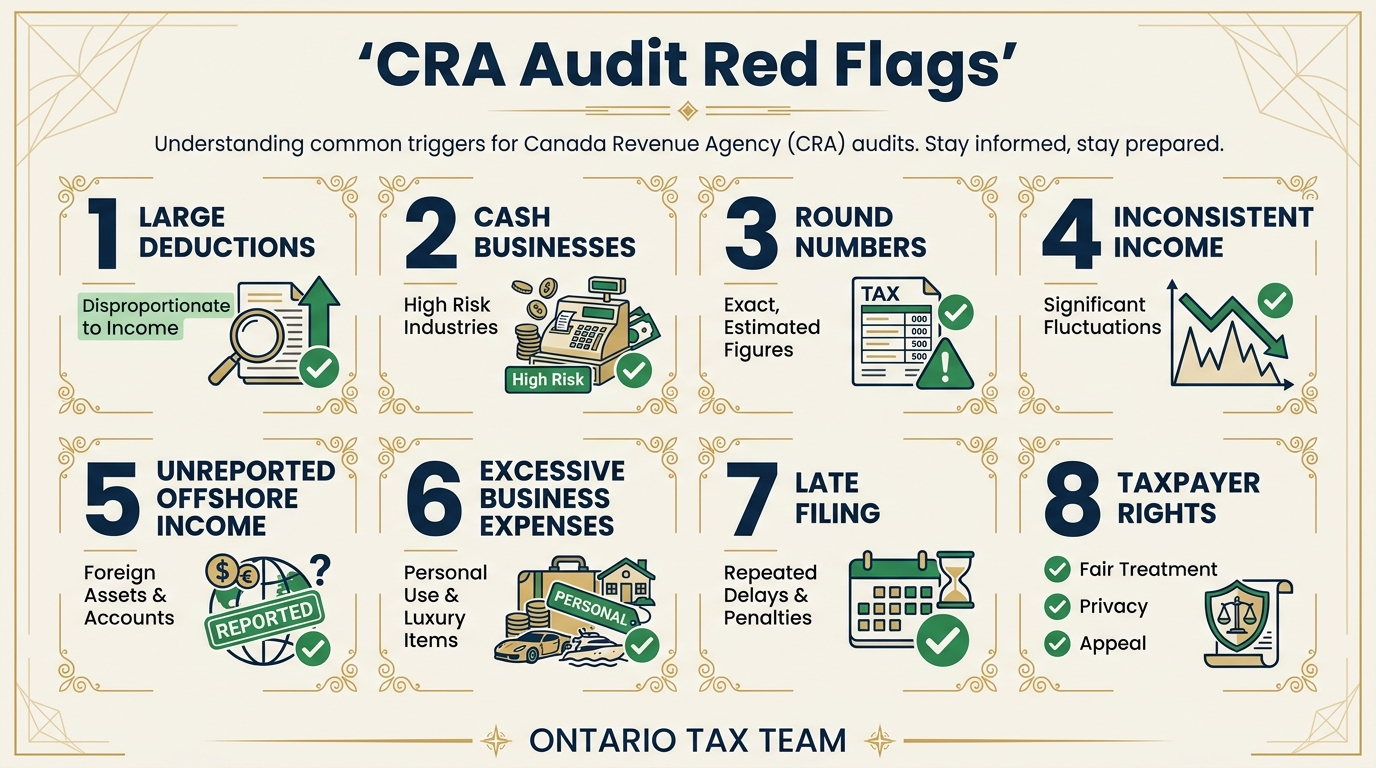
The CRA uses sophisticated risk-scoring algorithms to flag returns for review. While some audits are genuinely random, most are triggered by specific patterns. Here are the most common red flags:
- Unusually large deductions relative to income: If your business expenses consume 90% of your revenue year after year, the CRA will notice
- Inconsistent income reporting: When your reported income doesn't match T4s, T5s, or other slips the CRA already has on file
- Cash-heavy businesses: Restaurants, salons, construction trades, and other cash businesses face higher audit rates because underreporting is more common in these industries
- Repeated business losses: Claiming losses year after year raises questions about whether the activity is genuinely a business or a hobby
- Home office and vehicle claims: These are among the most commonly audited deductions because they're so frequently inflated
- Round numbers everywhere: If every expense on your return is a suspiciously round figure, it suggests estimation rather than actual record-keeping
- Industry benchmarks: The CRA compares your margins and expenses to industry norms. If your restaurant claims a 15% food cost when the industry average is 30%, that discrepancy gets flagged
What Happens During an Audit
The process typically follows a predictable sequence. You receive a written notice identifying the tax years under review and the specific areas the CRA wants to examine. For desk audits, you'll have 30 days to gather and submit the requested documents. For field audits, the auditor will schedule a mutually convenient time to visit.
During the audit, the CRA examiner compares your reported figures against your source documents: bank statements, invoices, receipts, contracts, and your bookkeeping records. They may ask questions about specific transactions, request additional documents, or ask you to explain unusual items. Having clean, well-organized records through proper accounting practices makes this process dramatically smoother.
At the end of the audit, the examiner issues a proposal letter outlining their findings. If they disagree with items on your return, they'll explain the proposed adjustments and give you an opportunity to respond before issuing a formal reassessment.
Your Rights During a CRA Audit
The Taxpayer Bill of Rights gives you important protections. Knowing them can make the process less stressful:
- You have the right to be represented by an accountant, lawyer, or other authorized representative at every stage
- You can request a reasonable amount of time to gather documents
- The CRA must explain their findings and give you an opportunity to respond before reassessing
- You can request a review by the auditor's supervisor if you believe you're being treated unfairly
- You have the right to file a formal objection if you disagree with the reassessment
- You can request that interest and penalties be waived if extraordinary circumstances prevented compliance (through the taxpayer relief provisions)
How to Prepare for a CRA Audit
If you've received an audit notice, here's what to do:
1. Don't Panic
An audit notice is not an accusation. The vast majority of audits are resolved without penalties. Take a breath, read the letter carefully, and note the deadline for responding.
2. Engage Professional Help
This is not the time for DIY. An experienced accountant or tax professional from a firm like our Oakville office knows what auditors look for, how to present your records in the best light, and how to negotiate if adjustments are proposed. They can also communicate with the CRA on your behalf, which removes the stress of direct interaction.
3. Organize Your Records
Gather everything related to the tax years under review: bank statements, credit card statements, invoices, receipts, contracts, and your bookkeeping files. Our guide on preparing documents for tax season covers what to keep and how to organize it. The more organized your presentation, the faster the audit concludes.
4. Don't Volunteer Extra Information
Answer the auditor's questions honestly and completely, but don't offer information beyond what's asked. If they ask about your vehicle expenses, provide your mileage log and receipts. Don't launch into a story about your business operations that might open new lines of inquiry.
5. Keep Copies of Everything
Never send originals. Provide copies of all documents and keep a record of exactly what was submitted and when. If you're uploading to the CRA's My Business Account portal, save screenshots or confirmation numbers.
Time Limits for CRA Audits
The CRA generally has three years from the date of your original Notice of Assessment to reassess your return (four years for corporations). However, there are important exceptions. If the CRA suspects fraud or gross negligence, there is no time limit - they can go back as far as they want. If you failed to file a return, the clock never starts running.
For this reason, it's important to always file your tax returnson time, even if you can't pay the balance owing. Filing on time starts the limitation clock and limits the CRA's reassessment window.
What If You're Reassessed?
If the CRA issues a Notice of Reassessmentand you disagree, you have 90 days to file a formal Notice of Objection. This sends your file to the CRA's Appeals Division, which is independent from the audit division that reassessed you. The appeals officer takes a fresh look at the facts and can uphold, vary, or vacate the reassessment.
If the Appeals Division still rules against you, the next step is the Tax Court of Canada. Most disputes are resolved well before this stage, but the option exists and taxpayers win at Tax Court more often than you might expect.
One critical point: you must pay the reassessed amount (or at least the undisputed portion) even while your objection is pending, or interest continues to accrue. You can request that collection action be deferred during the objection, but interest is not waived.
The Best Defence Is Good Records
Every conversation about audit preparation comes back to the same fundamental point: keep good records from day one. The CRA requires you to retain all business and tax records for at least six years from the end of the tax year they relate to. Organized records don't just protect you in an audit - they make your day-to-day financial management better and your annual tax filing faster and cheaper. See our bookkeeping tips for small businesses for practical record-keeping advice.
Key Takeaways
- •Most CRA audits are desk reviews requesting specific documents, not full investigations
- •Common triggers include large deductions, cash businesses, repeated losses, and inconsistent income
- •You have the right to professional representation and must be given time to respond
- •The CRA generally has three years from your Notice of Assessment to reassess (no limit for fraud)
- •If reassessed, you have 90 days to file a Notice of Objection to the independent Appeals Division
Facing a CRA Audit?
Our experienced tax professionals can represent you during a CRA audit and ensure the best possible outcome. Book a free 15-minute consultation.